During my work with the Center for Environmental and Social Studies (CESS) in Sudan, I developed an image-classification system to analyze updated satellite imagery and identify newly emerging mining sites across the country. The research aimed to investigate possible connections between the rapid proliferation of mining industries and the violent conflict that erupted in April 2023. Our analysis identified several new mining sites that appeared after the outbreak of the war.
For me, however, the satellite images evoked something beyond data or evidence. Many of them resembled wounds on a dying body, landscapes marked by extraction, fragmentation, and violence. Using some of these images as source material, I transformed them into 3D textures and speculative environments in order to narrate and reflect on the entanglement of extractivism, conflict, and ecological destruction.
Medium : Blender 3D- After effect

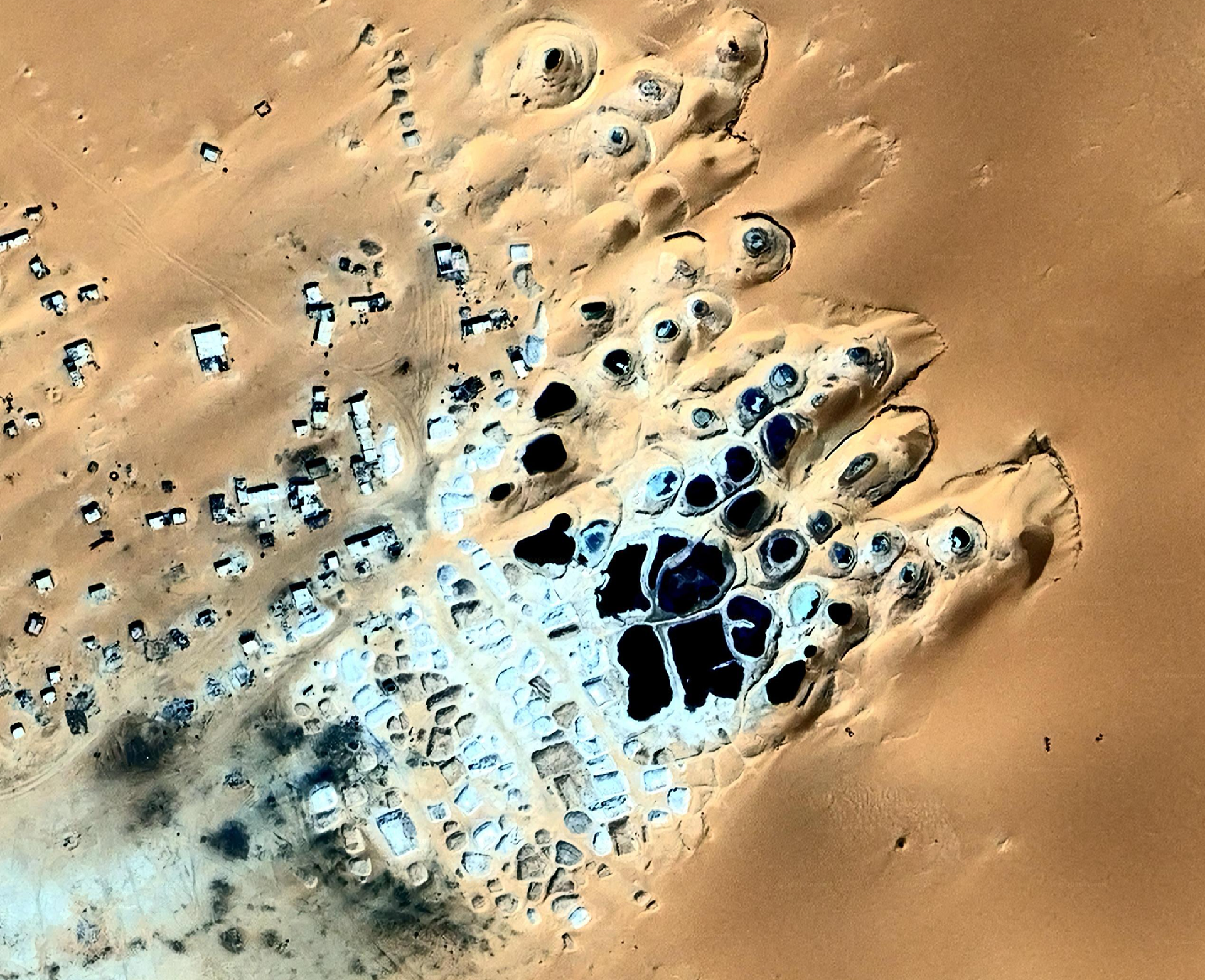
Atroun Well, West Darfur Satellite image, April 2024 This mining site was the first image to evoke, for me, the idea of landscape as injury. Ironically, it is located in West Darfur, a region that has been devastated by cycles of violent conflict since 2003 and that, during the current war, has witnessed some of its most brutal atrocities. At the time of the image, the area was under the control of the Rapid Support Forces (Rapid Support Forces (RSF)) militia, one of the major armed parties in the conflict.
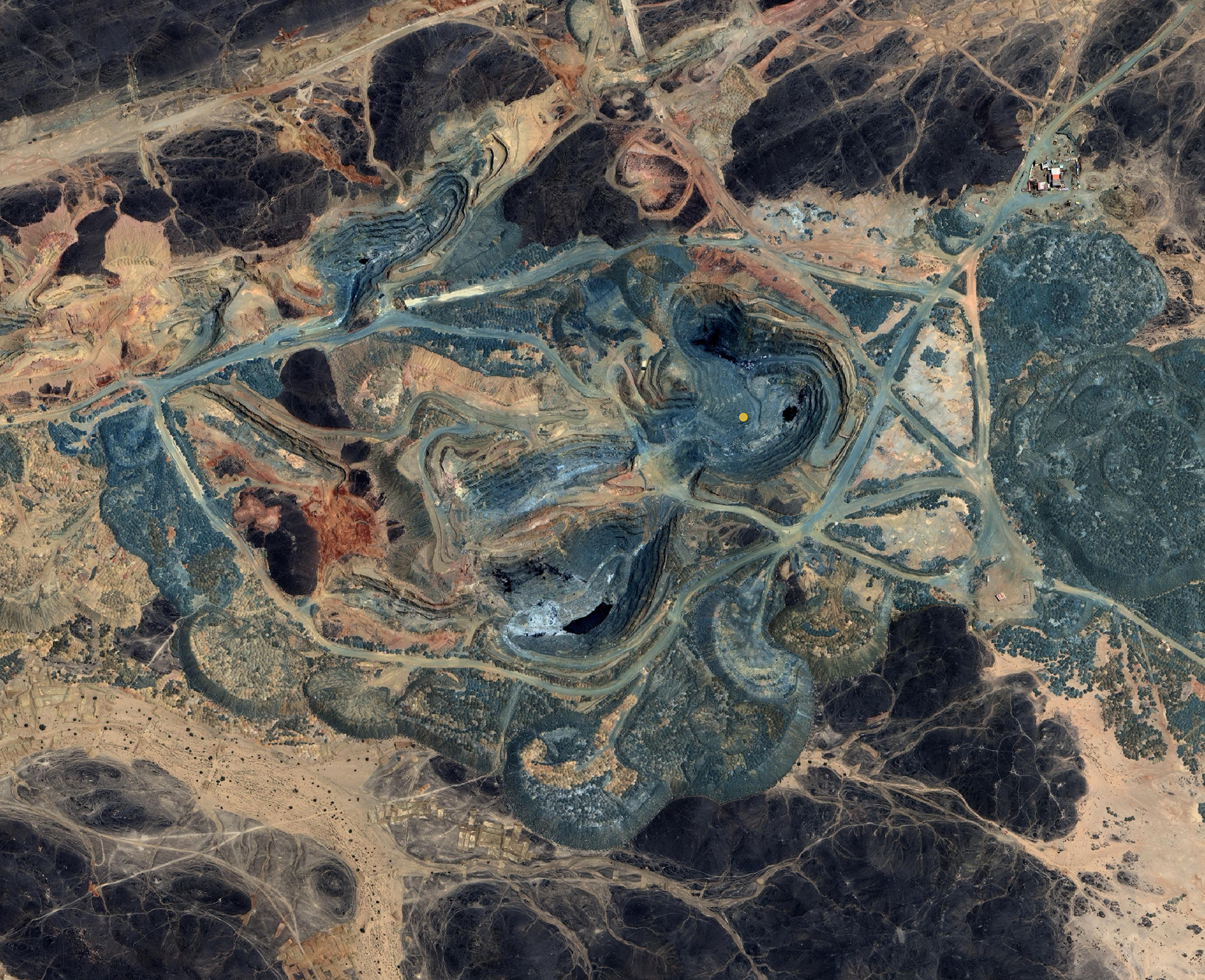
Mine, Red Sea State, Eastern Sudan Satellite image, April 2024 This mining site is located several kilometers from Port Sudan, which became the wartime administrative capital of the Sudanese Armed Forces (SAF), one of the two main armed parties in the current conflict alongside the RSF. The image reflects the growing proximity between extractive industries and military centers of power during the war.




Chain Reaction In February 2022, the Russian invasion of Ukraine triggered a global chain reaction shaped by war economies, sanctions, and the protectionist policies that followed. The sharp rise in gold prices intensified conflicts around mineral extraction and resource control across different parts of the world. This scene depicts fragmented references to violent landscapes emerging from the Russian invasion. Its reflection on how global systems of extraction, militarization, and economic competition continuously reproduce violence far beyond the battlefield itself.

Public Body The extraction of 3TG minerals — tin, tungsten, tantalum, and gold — is fundamental to the construction of electric public transportation systems. Since moving to Europe, I have been struck by how public transportation in the Global North is distinguished not only by efficiency, but also by the care invested in its interior design and public experience. These are spaces we inhabit every day. This scene functions as a reminder that even these seemingly ordinary and collective infrastructures remain deeply connected to extractivism. ItIt reflects on the unavoidable entanglement between daily life, technological comfort, and the global systems of mineral extraction and supply chains that sustain them.

Embedded Violence In 2024, Volkswagen published its list of approved smelter sources, in which both Sudan and the Democratic Republic of Congo were present. According to a report by CESS a Sudanese research center, one of the Sudanese smelters referenced in the supply chain was no longer functioning at the time; its gold reserves had reportedly been seized by a warring militia. The case raised broader questions about the relationship between global automobile industries and the embedding of conflict, extraction, and violence within international supply chains. This scene brings these tensions together, reflecting on how systems of industrial production and technological progress remain materially connected to zones of war and resource exploitation.
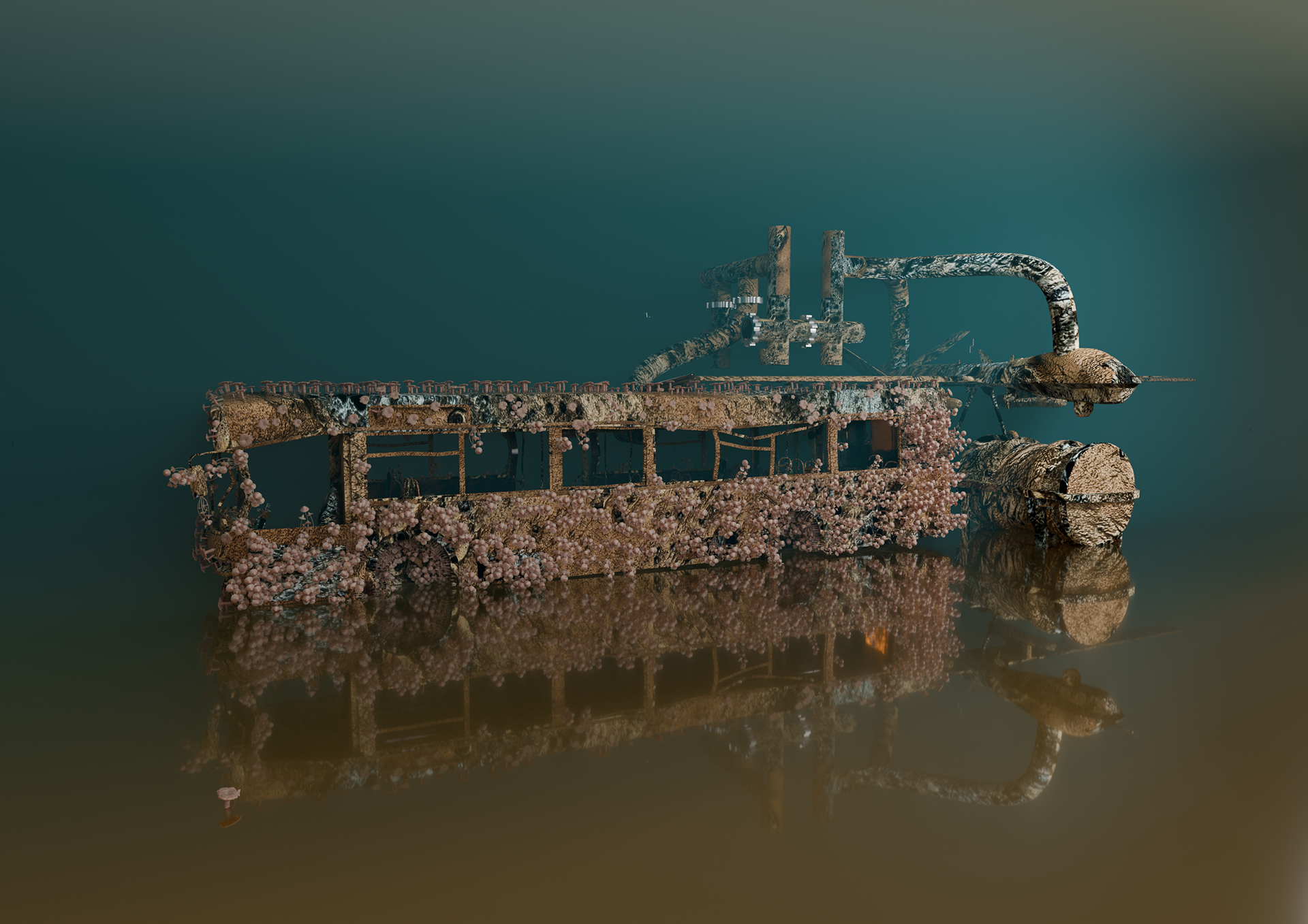
Decay Automated surveillance and remote killing have benefited more from extractivism than public infrastructure ever has. Extraction kills upstream, downstream, and through its final products. This scene brings these elements together: the Unmanned Aerial Vehicle ( Unmanned Aerial Vehicle (UAV)) as an instrument of automated violence, suspended within the slow decay of public infrastructure. The image reflects on how systems built through extraction ultimately produce abandonment, ruin, and death.

ECCHR Annual Report 2025